|
 |
|
STC Program Second-grade Units
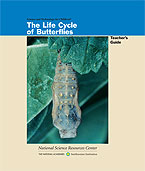 The Life Cycle of Butterflies The Life Cycle of Butterflies
The Life Cycle of Butterflies introduces students to the concept of life cycles by inviting them to investigate one organism—the painted lady butterfly (Vanessa cardui). During an eight-week period, students observe, record, and describe the metamorphosis from caterpillar to chrysalis and from chrysalis to adult butterfly. In many cases, they watch the butterfly lay eggs. The butterfly ultimately dies a natural death, thereby completing students’ observations of the life cycle. The children compare the life cycle of the butterfly with that of other organisms, an experience that deepens their understanding of the diversity of life and the patterns that characterize animal life cycles.
Goals
Unit Overview
STC Meets the Standards
Sample Lesson
To Order
Back to units page
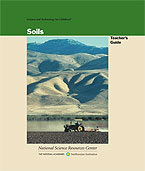 Soils Soils
In Soils, students investigate the chief components of soil—sand, clay, and humus—and explore the relationship between soil and plant growth. Early in the unit, they create their own compost bags. This activity enables them to observe the decomposition of different kinds of organic materials over time. Students observe and read about earthworms to learn about their connection to plant roots and soils. The students also conduct tests that enable them to observe and compare such properties of soil as odor, appearance, and texture. Phenomena such as settling, water content, and soil consistency are also explored. These are then related to plant growth, as students plant cucumber seeds in a clear plastic tube. By observing root growth, students learn about the role of roots in keeping the plant anchored and upright. In a final activity, students apply what they have learned to investigate a sample of local garden soil.
Goals
Unit Overview
STC Meets the Standards
Sample Lesson
To Order
Back to units page
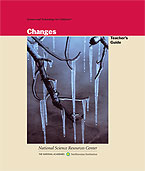 Changes Changes
In Changes, students expand their understanding of solids, liquids, and gases by exploring changes in state. They investigate freezing, melting, evaporation, and condensation of water. In a sequence of lessons, students produce a mixture of two solids and a mixture of solids with liquids and observe the results. They work through several methods to separate mixtures: sieving, filtration, evaporation, and chromatography. The students set up races that involve sugar dissolving in water and observe the effects of particle size and water temperature on the rate at which the sugar dissolves. They also observe crystals formed as a result of evaporation. Students observe some changes that occur immediately and some that occur over time, and they begin to recognize the characteristics of chemical reactions. They investigate rusting, and they observe and collect the gas formed by mixing an effervescent tablet in water. Students have several opportunities to practice their new skills in lessons in which they devise ways of separating a mystery mixture and plan and carry out investigations that involve other changes.
Goals
Unit Overview
STC Meets the Standards
Sample Lesson
To Order
Back to units page
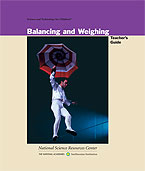 Balancing and Weighing Balancing and Weighing
Balancing and Weighing introduces students to the relationship between balance and weight. Experiences with a beam balance introduce students to the concept that amount of weight, position of weight, and position of the fulcrum affect balance. Work with an equal-arm balance challenges students to place objects in serial order on the basis of weight and to appreciate that weighing is the process of balancing an object against a certain number of standard objects. In the final lessons, students turn to a series of problem-solving investigations with the equal-arm balance and cupfuls of four different foods. These activities provide an opportunity to explore the relationship between weight, density, and volume.
Goals
Unit Overview
STC Meets the Standards
Sample Lesson
To Order
Back to units page
|
|